

Christianity in a Pro-Slavery America – How Some Felt Bondage and Servitude Was Part of Natural Law
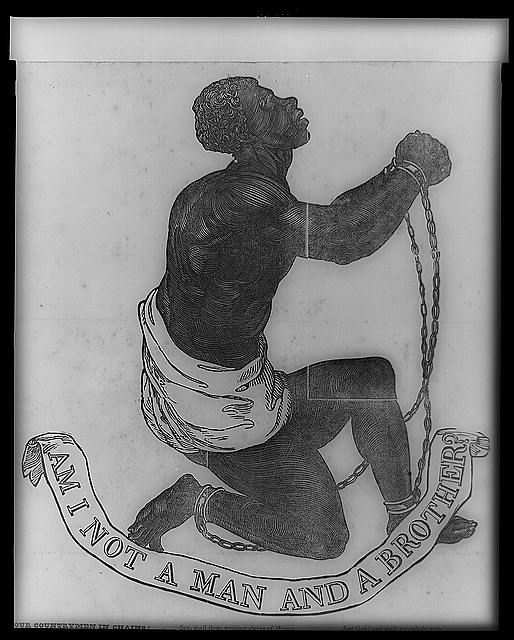
Written By Austin Valentine, Jr.
Over the past 150 years, an institution that was the social, economic, and cultural norm of 18th and 19th century America has been hotly contested among academic scholars and American citizens alike. Most wondering how the institution of slavery survived for as long as it did – citing religious movements, the potential for slave uprisings, and runaway slaves. Those who believed in slavery often provided slaves with a means of unity and spiritualism by introducing them to Christianity. Masters hoped to keep slaves both productive and pacified through unified means. Such efforts date back to the colonial years, long before America’s official founding, when slave numbers started to multiply in the New World.
During the Colonial era, in a 1757 letter about the condition of slaves in the British colonies, a Presbyterian minister named Samuel Davies implied that slaves needed unity to remain loyal to their masters – citing Christianity as the answer. Davies’ letter was written during what was known as The French and Indian War, also called the Seven Year’s War, which was a lengthy battle between British forces and the French with their Indian allies. Davies felt that “Christianizing the slaves would help keep them on the British side during the Seven Year’s War.”[1] Otherwise, they might revolt or run away to join forces with the French.
Davis explains how he helped pull slaves together and introduce them to God and Jesus Christ through Christianity, providing them with bibles and hymns. In most cases, slaves had never been given any type of books or reading materials before, so most slaves openly accepted such items as a blessing. Moreover, Davies worked with masters to provide spiritual guidance to slave-owning families – who would listen to Davies preach God’s message.[2]
Little did Reverend Davies know that a century later, slavery would still be in existence. By the turn of the 19th century, slavery was starting to disappear around the globe, but it was still going strong in places like the United States. Furthermore, the public’s views on slavery had grown more diverse, fostering many mixed opinions and varying religious perspectives. In most cases, it sparked questions about how good Christian folk could hold other human beings in bondage.
Pro-slavery Pastor John C. Lord, D.D. addressed such a question during an early 19th-century sermon. He stated that “in the process of time it will be regarded as a most remarkable fact, in the history of Jesus Christ’s church on earth, that a Christian minister in the Jubilee year of the nineteenth century, and in the land of freedom, felt himself called upon in his work of love to show that Christianity Sanctions Slavery.”[3] He felt that the government should protect the institution of slavery and aid in capturing runaway slaves and returning “…them to the house of bondage.”[4] Therefore, when the American Civil War broke out, it was no surprise that a vast number of church-going Christians fought to protect the institution of slavery. In some cases, ministers who took pride in preaching the word of God went so far as to take up arms in slavery’s defense. Most of whom conveyed that they were defending their rights as Americans, as well as the rights granted to them by God.
Moreover, the former President of the Confederate States of America – Jefferson Davis – noted, in his memoirs, that slavery provided a valuable service to those who were enslaved. “Generally they were born the slaves of barbarian masters, untaught in all the useful arts and occupations, reared in heathen darkness, and, sold by heathen masters, they were transferred to shores enlightened by the rays of Christianity. There, put to servitude, they were trained in the gentle arts of peace and order and civilization; they increased from a few unprofitable savages to millions of efficient Christian laborers.”[5]
Therefore, one could conclude that many slaveholding families during the 18th and 19th centuries were devout Christians. Most of whom felt that slavery was part of natural law – God’s law. Moreover, they often used the King James Bible to aid in the justification of their cause – citing Ephesians six verse five “Servants, be obedient to them that are your masters according to the flesh, with fear and trembling, in singleness of your heart, as unto Christ.”[6]
However, this ideology is contradicted by Matthew seven verse twelve “Therefore all things whatsoever ye would that men should do to you, do ye even so to them: for this is the law and the prophets.”[7] Furthermore, in Luke six verse thirty-one, “And as ye would that men should do to you, do ye also to them likewise.”[8] Therefore, such contradiction leads one to believe that slave-owners were trying to use any means necessary to protect their way of life and their economic future.
Works Cited
Davis, Jefferson. The Rise and Fall of the Confederate Government - Volume 2. Vol. 2. 2 vols. New York, NY: The Perfect Library, 1881. Accessed July 20, 2020. https://read.amazon.com/.
Kidd, Thomas S. The Great Awakening - A Brief History with Documents. Boston, MA: Bedford/St. Martin’s, 2008.
Minister of the Gospel, in Massachusetts, and in Massachusetts. A minister of the gospel. Slavery in Its Relation to God : A Review of Rev. Dr. Lord’s Thanksgiving Sermon, in Favor of Domestic Slavery, Entitled The Higher Law, in Its Application to the Fugitive Slave Bill. Buffalo: A.M. Clapp & co., printers, 1831. Accessed April 12, 2021. https://link.gale.com/apps/doc/CY0103538302/SABN?u=vic_liberty&sid=SABN&xid=b31aa1f8&pg=1.
Whittier, John Greenleaf. Am I Not a Man and a Brother? 1 print : woodcut on wove paper, 1837. Broadside Collection. Library of Congress Rare Book and Special Collections Division Washington, D.C. 20540 USA. Accessed April 11, 2021. https://tile.loc.gov/storage-services/service/pnp/cph/3a40000/3a44000/3a44400/3a44497r.jpg.
World Bible Publishers, Inc., ed. The Holy Bible. King James Version. Iowa Falls, IA: World Bible Publishers, Inc., 1989.
[1] Thomas S. Kidd, The Great Awakening - A Brief History with Documents (Boston, MA: Bedford/St. Martin’s, 2008), 117–119.
[2] Ibid.
[3] in Massachusetts Minister of the Gospel and in Massachusetts. A minister of the gospel, Slavery in Its Relation to God : A Review of Rev. Dr. Lord’s Thanksgiving Sermon, in Favor of Domestic Slavery, Entitled The Higher Law, in Its Application to the Fugitive Slave Bill (Buffalo: A.M. Clapp & co., printers, 1831), 5, accessed April 12, 2021, https://link.gale.com/apps/doc/CY0103538302/SABN?u=vic_liberty&sid=SABN&xid=b31aa1f8&pg=1.
[4] Ibid., 6.
[5] Jefferson Davis, The Rise and Fall of the Confederate Government - Volume 2, vol. 2 (New York, NY: The Perfect Library, 1881), 144–145, accessed July 20, 2020, https://read.amazon.com/.
[6] World Bible Publishers, Inc., ed., The Holy Bible, King James Version (Iowa Falls, IA: World Bible Publishers, Inc., 1989), 139–140.
[7] Ibid., 5.
[8] Ibid., 46.

Comments